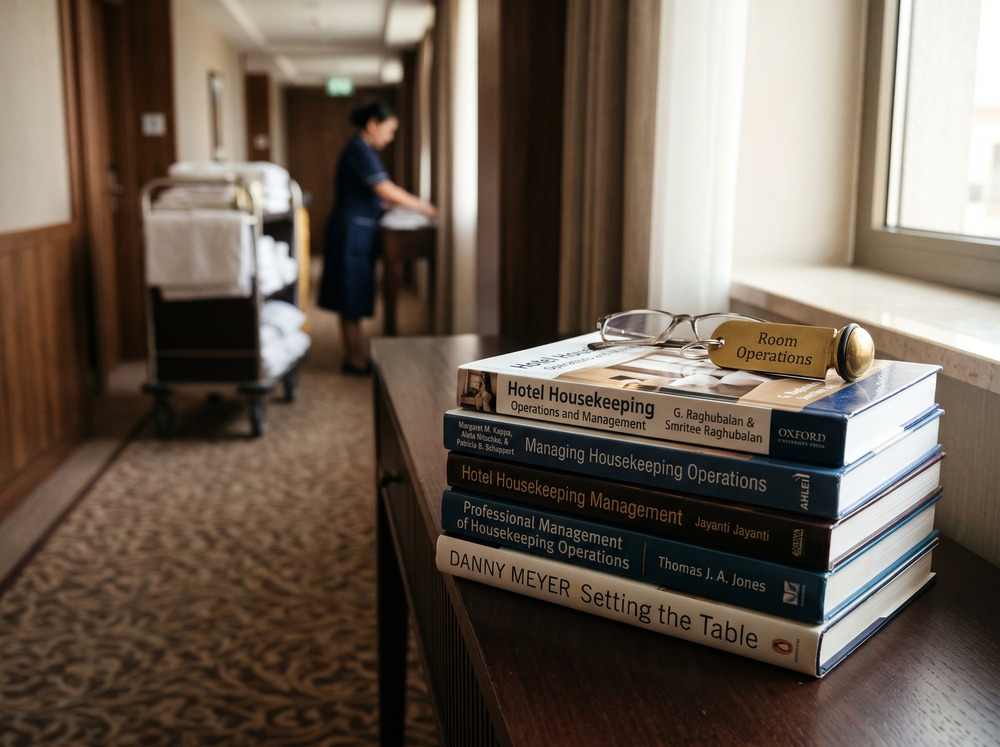

What is one of the most important factors behind a five-star guest experience? It isn’t always the luxurious lobby, beautiful amenities, or exceptional dining. Often, it starts with a perfectly clean and comfortable guest room.
Housekeeping is one of the most essential departments in any hotel. From maintaining spotless guest rooms to managing laundry operations, controlling expenses, and ensuring consistent cleanliness standards, housekeeping teams play a critical role in the success of a property.
Yet effective hotel housekeeping requires much more than cleaning rooms.
It involves leadership, organization, staff training, inventory management, quality control, and a commitment to delivering an exceptional guest experience.
Whether you’re an executive housekeeper, hotel general manager, housekeeping supervisor, or hospitality student, investing in professional development can help you strengthen your skills and improve daily operations.
That’s why we’ve put together this guide to the best hotel housekeeping books every hospitality professional should consider reading.
These resources, available through Best Hotel Books, cover everything from housekeeping fundamentals to advanced management techniques and operational efficiency.
When guests enter their hotel rooms, they expect a clean, comfortable, and welcoming environment.
Fresh linens, spotless bathrooms, properly maintained furnishings, and attention to detail all contribute to their first impressions.
Even a beautiful hotel can receive negative reviews when cleanliness standards fall below expectations.
But housekeeping isn’t just about appearance.
A well-managed housekeeping department also contributes to:
For hotel managers, developing a strong housekeeping operation is not simply a departmental responsibility. It’s an investment in the property’s overall performance.
Housekeeping is sometimes viewed as a behind-the-scenes department, but its contribution to guest satisfaction and profitability deserves greater recognition.
Love for Hospitality: Housekeeping Excellence Behind Exceptional Guest Satisfaction and Profit places that connection at the center of its message.
The book’s focus is especially relevant for hotel leaders who want to understand housekeeping as a strategic part of the guest experience rather than simply a necessary operating expense.
A hotel’s housekeeping performance can influence room readiness, cleanliness scores, labor productivity, and overall guest satisfaction.
For example, improving communication between housekeeping and the front desk can help reduce delays in room availability.
Better inventory practices can also support cost control without sacrificing cleanliness standards.
The key lesson for hospitality professionals is that housekeeping excellence contributes to both service quality and business performance.
Why consider this book?
It’s a relevant choice for professionals interested in the relationship between housekeeping quality, guest satisfaction, and hotel profitability.
Best for: Hotel owners, general managers, executive housekeepers, and hospitality leaders.
Explore Love for Hospitality in the Best Hotel Books Housekeeping Collection
For hospitality professionals who want a comprehensive understanding of housekeeping operations, Hotel Housekeeping: Operations and Management offers a broad perspective on the department’s responsibilities.
The book examines housekeeping as an essential part of hotel management, focusing on creating safe, clean, comfortable, and welcoming environments.
Its subject matter includes housekeeping operations, budgeting, interior design, safety, security, and long-term property maintenance.
These topics are especially important for executive housekeepers responsible for balancing service standards with operational costs.
Consider a hotel experiencing increasing housekeeping expenses.
Without a clear understanding of inventory management, budgeting, and departmental procedures, managers may struggle to identify opportunities for improvement.
A stronger foundation in housekeeping management can help leaders evaluate costs, establish priorities, and improve departmental planning.
Why consider this book?
It provides a comprehensive introduction to the operational and managerial responsibilities of hotel housekeeping.
Best for: Executive housekeepers, hotel operations managers, hospitality students, and department supervisors.
Explore Hotel Housekeeping: Operations and Management
One of the biggest challenges in hotel housekeeping is maintaining consistent cleaning standards across employees, shifts, and room types.
New employees may arrive with different levels of experience, while established team members may develop different ways of completing tasks.
Without structured training, these differences can affect service consistency.
Hotel Housekeeping: A Training Manual is a relevant resource for professionals seeking to strengthen their understanding of housekeeping procedures and employee training.
A training-focused approach is particularly valuable when introducing new room attendants or preparing employees for additional responsibilities.
For example, a housekeeping supervisor can use a structured training program to reinforce expectations for room preparation, bathroom cleanliness, linen handling, and final inspections.
Clear procedures also make it easier to evaluate performance and provide constructive feedback.
Why consider this book?
It’s a useful title to explore when building or improving a housekeeping training program.
Best for: Housekeeping supervisors, trainers, room attendants, hospitality instructors, and newly appointed managers.
Explore Hotel Housekeeping Books and Training Resources
Successful housekeeping departments depend on effective planning, coordination, and supervision.
Every day, housekeeping managers must balance room assignments, staffing levels, guest requests, cleaning priorities, and communication with other departments.
Managing Housekeeping Operations is a relevant title for professionals who want to strengthen their understanding of the management side of housekeeping.
In a busy hotel, even small operational inefficiencies can create challenges.
For example, poor communication between housekeeping and the front office may result in guests waiting for rooms that have already been cleaned but not updated in the property management system.
Similarly, inefficient room assignments can create unnecessary delays and uneven workloads.
Strong housekeeping management requires clear communication, effective supervision, and procedures that support both employees and guests.
Why consider this book?
It’s a practical choice to investigate for professionals moving into supervisory or management responsibilities.
Best for: Executive housekeepers, housekeeping managers, assistant managers, and hospitality operations supervisors.
Explore Managing Housekeeping Operations
For readers seeking a more detailed academic and operational resource, Hotel Housekeeping: Operations and Management, 3rd Edition offers extensive coverage of housekeeping functions.
The book explores departmental organization, housekeeping personnel management, daily cleaning routines, inventory, budgeting, linen and laundry operations, and maintenance.
It also addresses important operational considerations such as safety, security, waste disposal, pest control, facilities planning, and property preparation.
These subjects demonstrate how housekeeping connects to nearly every aspect of hotel operations.
For example, proper linen management is not simply about ensuring clean sheets are available.
It also involves monitoring inventory, controlling replacement costs, coordinating laundry operations, and maintaining guest comfort.
Likewise, effective housekeeping planning requires coordination with engineering and maintenance teams to address room defects before they affect guest satisfaction.
Why consider this book?
Its comprehensive coverage makes it particularly relevant for readers who want to develop a deeper understanding of housekeeping operations and management.
Best for: Hospitality students, executive housekeepers, hotel management professionals, and hospitality educators.
Explore Hotel Housekeeping: Operations and Management, 3rd Edition
Choosing the right housekeeping book depends on your current role, experience, and professional goals.
If you’re new to hotel housekeeping, a training-focused resource can help you develop a stronger understanding of daily procedures and service expectations.
If you’re preparing for a supervisory position, books focused on housekeeping management can help you explore scheduling, team coordination, and operational planning.
Experienced executive housekeepers may benefit from more comprehensive resources covering departmental budgeting, inventory management, facilities coordination, and long-term operational strategy.
For hotel owners and general managers, books connecting housekeeping performance with guest satisfaction and profitability can provide a valuable broader perspective.
The goal isn’t simply to read more books.
It’s to find resources that help you solve real operational challenges and develop stronger housekeeping teams.
Reading about housekeeping management is valuable, but the greatest benefits come from applying what you learn.
Here are five practical strategies hotel leaders can implement.
Create clear room-cleaning procedures and inspection checklists.
Employees should understand the expected cleanliness standards for guest rooms, bathrooms, public areas, and back-of-house spaces.
Consistency helps reduce service errors and improves quality control.
Housekeeping training should continue beyond an employee’s first week.
Regular coaching, refresher sessions, and demonstrations can help employees maintain standards and develop new skills.
Training should also include safe cleaning practices, proper chemical handling, equipment use, and communication procedures.
Housekeeping must work closely with the front desk, maintenance, laundry, and other hotel departments.
Clear room-status updates, maintenance reporting, and communication about guest requests can help reduce operational delays.
Room-cleaning productivity is important, but speed should never become the only measure of success.
Managers should consider room type, occupancy conditions, cleaning requirements, employee workloads, and inspection results when evaluating performance.
A balanced approach helps protect both service quality and employee well-being.
Cleaning supplies, linens, amenities, and equipment represent ongoing operating expenses.
Regular inventory checks, proper storage, responsible purchasing, and preventive maintenance can help reduce unnecessary waste.
The objective is to manage costs while maintaining the cleanliness and comfort guests expect.
Housekeeping is often one of the largest operational departments in a hotel.
Its performance influences room availability, guest satisfaction, employee productivity, and operating expenses.
Yet hotel leaders who have not worked directly in housekeeping may underestimate the complexity of the department.
Understanding housekeeping operations can help general managers make better decisions about staffing, budgets, training, and service standards.
It can also improve collaboration between departments.
For example, when front office managers understand how room assignments and cleaning priorities work, they can communicate more effectively with housekeeping teams during busy arrival periods.
Similarly, hotel owners who understand linen costs, equipment requirements, and labor planning are better positioned to evaluate departmental budgets.
A successful hotel doesn’t simply have a housekeeping department. It has a housekeeping operation that is supported, respected, and managed as an essential part of the business.
Absolutely.
Whether you’re beginning your hospitality career or managing an established housekeeping team, professional learning can help strengthen your knowledge and decision-making skills.
Housekeeping books provide opportunities to explore operational practices, management principles, training methods, and quality-control strategies.
They can also introduce new perspectives that encourage managers to review existing procedures and identify areas for improvement.
For hospitality students, these books can build foundational knowledge before entering the workplace.
For experienced managers, they can serve as reference materials for training, planning, and professional development.
And for hotel owners, they can provide a deeper understanding of one of the most important departments contributing to the guest experience.
When guests remember an exceptional hotel stay, they may think about the friendly front desk staff, comfortable beds, beautiful surroundings, or thoughtful service.
But behind those experiences is a housekeeping team working to maintain the property’s standards every day.
From preparing rooms to managing supplies, coordinating with maintenance, and ensuring consistent cleanliness, housekeeping professionals contribute directly to a hotel’s success.
The best hotel housekeeping books help professionals understand these responsibilities while developing the skills needed to manage them effectively.
Whether you’re looking to improve staff training, strengthen departmental leadership, or create more efficient operations, the right resources can support your professional growth.
Because exceptional housekeeping isn’t just about clean rooms. It’s about creating the foundation for an exceptional guest experience.
Ready to strengthen your housekeeping knowledge and take your hotel operations to the next level?
Explore a collection of housekeeping books covering training, management, daily operations, guest satisfaction, and departmental efficiency.
Whether you’re a hotel owner, general manager, executive housekeeper, supervisor, or hospitality student, you’ll find resources to support your professional development.
Shop the Best Hotel Housekeeping Books at Best Hotel Books
Better housekeeping knowledge leads to stronger teams, more consistent operations, and memorable guest experiences.


We’d love to hear from you! Whether you have a question, feedback, or your own insights to add, drop a comment below. Let’s keep the conversation going and learn from each other’s experiences.