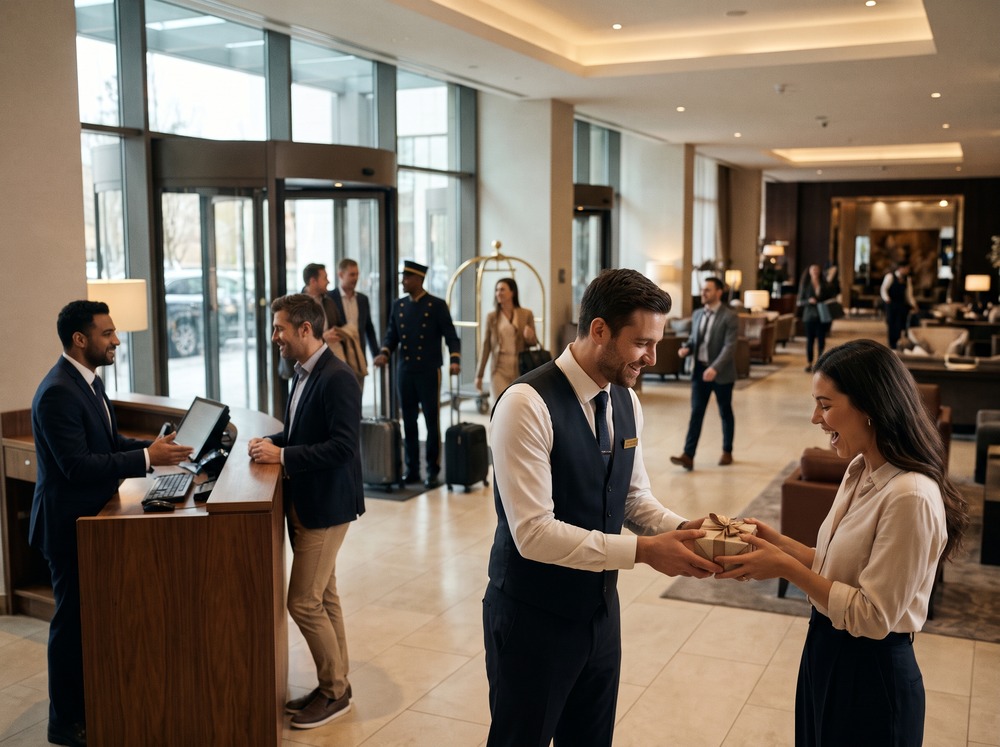

What if the secret to running a successful hotel isn’t simply meeting guest expectations, but creating experiences guests never imagined possible?
In today’s competitive hospitality industry, guests expect comfortable rooms, efficient service, and quality amenities. These are the foundations of a good hotel stay, but they don’t always create lasting memories.
What guests often remember most are the unexpected moments of genuine care.
A thoughtful welcome. A personalized surprise. An employee who goes beyond their responsibilities to make someone’s day better.
These moments are at the heart of Unreasonable Hospitality: The Remarkable Power of Giving People More Than They Expect by Will Guidara.
Through inspiring stories from his career in the restaurant industry, Guidara demonstrates how creativity, generosity, leadership, and attention to detail can transform ordinary service into extraordinary experiences.
Although the book focuses on restaurants, its lessons are especially valuable for hotel owners, general managers, department heads, and hospitality professionals.
Because exceptional hospitality isn’t just about what you provide. It’s about how you make people feel.
Unreasonable Hospitality tells the story of Will Guidara’s journey in the restaurant industry, particularly his role in transforming Eleven Madison Park in New York City into one of the world’s most celebrated restaurants.
Guidara and his team developed an approach to hospitality that went beyond traditional expectations of fine dining.
Rather than focusing exclusively on food, presentation, and service procedures, they looked for opportunities to create meaningful, personalized experiences.
One memorable example involves guests who mentioned that they had never tried a New York City street hot dog.
Instead of dismissing the comment, Guidara arranged for hot dogs to be brought into the restaurant and served as a special experience.
The gesture was simple, but it created an unforgettable moment.
That story captures the philosophy behind the book.
True hospitality comes from listening carefully, understanding what matters to people, and finding creative ways to exceed their expectations.
For hotels, the same principle can transform how employees approach guest interactions, service recovery, and personalized experiences.
Every guest arrives at a hotel with different expectations, preferences, and reasons for traveling.
Some are celebrating special occasions. Others are attending business meetings, enjoying family vacations, or simply looking for a peaceful getaway.
Hotels that recognize these differences have opportunities to create more meaningful experiences.
Imagine a couple checking into your property to celebrate their wedding anniversary.
A standard welcome may be professional and pleasant.
But a handwritten note, a thoughtful room detail, or a personalized recommendation for a romantic dining experience could make their stay more memorable.
The goal isn’t necessarily to provide expensive complimentary amenities.
It’s to demonstrate that your team recognizes guests as individuals rather than reservation numbers.
Hotel leadership takeaway: Encourage employees to listen carefully, recognize guest preferences, and look for thoughtful ways to personalize the experience.
One of the most important lessons from Unreasonable Hospitality is that exceptional service requires employees who feel empowered to act.
In many hotels, frontline employees are trained to follow procedures and seek management approval before making decisions.
While operational standards are necessary, overly restrictive procedures can prevent employees from responding creatively to guest needs.
Imagine a front desk agent discovering that a family has arrived after a long, stressful travel delay.
An empowered employee might arrange a small welcome gesture or coordinate with another department to make the arrival experience easier.
These actions may seem minor, but they can create a lasting impression.
Empowerment doesn’t mean giving employees unlimited authority.
It means establishing reasonable guidelines and trusting team members to make thoughtful decisions within those boundaries.
Hotel leadership takeaway: Provide employees with clear service-recovery guidelines and appropriate decision-making authority so they can respond quickly and creatively to guest needs.
Exceptional guest experiences begin behind the scenes.
A hotel cannot consistently deliver warm, thoughtful hospitality if its employees feel unsupported, unappreciated, or disconnected from the organization’s goals.
Guidara’s philosophy highlights the importance of creating a workplace culture where people feel valued and inspired.
For hotel managers, this means recognizing that employee experience and guest experience are closely connected.
Consider a housekeeping team working through a demanding period of high occupancy.
A manager who focuses exclusively on room productivity may overlook the challenges employees face.
A supportive leader, however, will communicate expectations clearly, provide necessary resources, recognize outstanding performance, and help employees manage their workloads.
When employees feel respected and supported, they are better positioned to deliver thoughtful service.
Hotel leadership takeaway: Treat your employees with the same care and respect you want them to extend to guests. Recognition, communication, and professional development should be part of your service culture.
Luxury hotels often invest heavily in facilities, technology, and premium guest amenities.
While these investments can enhance the guest experience, memorable hospitality doesn’t always require a large budget.
Sometimes, the most meaningful gestures are simple.
A front desk agent remembering a returning guest’s preferred room location.
A restaurant server recognizing a guest’s favorite beverage.
A housekeeping attendant leaving an extra pillow after noticing a guest’s preference.
A concierge recommending a local experience based on a traveler’s interests.
These details communicate something important: someone was paying attention.
For independent hotels and smaller properties, this lesson is particularly valuable.
You don’t need the operating budget of an international luxury resort to create meaningful guest experiences.
You need employees who are attentive, thoughtful, and encouraged to care.
Hotel leadership takeaway: Focus on creating personalized moments that demonstrate genuine attention rather than relying exclusively on costly upgrades or elaborate amenities.
Positive guest experiences can influence hotel reviews, recommendations, and repeat bookings.
Travelers frequently share memorable experiences with friends, family, and online audiences.
While hotels cannot control every review or recommendation, they can create an environment where thoughtful service becomes a consistent part of the guest journey.
Imagine a guest who experiences a minor problem during their stay.
The issue itself may be frustrating, but the way the hotel responds can significantly influence the guest’s overall impression.
An employee who listens sincerely, takes responsibility, and provides a thoughtful resolution may help restore confidence in the property.
Over time, these experiences can contribute to stronger guest relationships and a more positive reputation.
Hotel leadership takeaway: Make exceptional hospitality part of your hotel’s everyday culture rather than treating memorable service as an occasional special event.
The philosophy behind Unreasonable Hospitality becomes especially powerful when applied to the entire hotel guest experience.
The guest experience begins before check-in.
Hotels can use pre-arrival communication to understand preferences, confirm special occasions, and provide helpful information.
For example, a resort might offer personalized recommendations for dining, local attractions, or activities based on the guest’s interests.
The objective is to make guests feel welcomed before they arrive.
Check-in should be efficient, but it should also feel welcoming.
Employees can create a positive first impression through genuine conversation, attentive listening, and thoughtful communication.
A guest arriving after a long journey may appreciate a smooth process and a helpful explanation of the property’s amenities.
Throughout the stay, employees have opportunities to recognize guest needs and create thoughtful experiences.
Housekeeping, front office, food and beverage, and recreation teams can work together to personalize service.
The key is encouraging employees to pay attention to small details and communicate relevant preferences appropriately.
Even well-managed hotels experience operational challenges.
Rooms may not be ready on time. Maintenance problems can occur. Guest requests may occasionally be overlooked.
What matters is how the hotel responds.
Empathetic communication, timely solutions, and appropriate follow-up can help rebuild guest trust.
Hospitality doesn’t have to end when guests leave.
A thoughtful thank-you message, a response to guest feedback, or recognition of returning guests can help maintain positive relationships.
These efforts can encourage guests to remember the property when planning future travel.
Independent hotels often compete with large hospitality brands that have extensive marketing budgets, loyalty programs, and sophisticated technology.
But smaller properties may have an advantage when it comes to personalized service.
Without the same level of organizational complexity, independent hotels can sometimes adapt more quickly to guest preferences and create unique experiences.
A boutique hotel might remember a returning guest’s favorite breakfast.
A family-owned resort might help visitors discover a lesser-known local attraction.
A small business hotel might provide thoughtful assistance to a guest preparing for an important meeting.
These experiences help establish a property’s personality and create meaningful connections with guests.
The lesson from Unreasonable Hospitality is that exceptional service isn’t reserved for luxury properties.
Any hotel can create unforgettable experiences when its people are encouraged to care, listen, and act thoughtfully.
Absolutely.
For hospitality professionals looking to strengthen guest satisfaction, employee engagement, and service culture, Unreasonable Hospitality offers valuable inspiration.
The book is particularly relevant for:
Unlike a traditional hotel operations manual, the book focuses on the mindset and leadership practices that make exceptional hospitality possible.
Its lessons encourage readers to think beyond procedures and consider the emotional impact of service.
Creating memorable guest experiences isn’t simply about making people happy.
It can also support important business objectives.
Hotels that consistently deliver thoughtful service may strengthen guest loyalty, encourage positive recommendations, and differentiate themselves from competitors.
Personalized hospitality can also contribute to a stronger brand identity.
For hotel managers, however, the challenge is balancing creativity with operational efficiency.
Not every guest interaction requires an elaborate surprise.
The most effective approach is to develop a service culture where employees recognize meaningful opportunities while respecting budgets, operational standards, and guest preferences.
This balance allows hotels to deliver memorable experiences without compromising financial sustainability.
The goal isn’t to spend more on every guest. It’s to make every guest feel that their experience matters.
The hospitality industry continues to evolve through technology, changing traveler expectations, and increasing competition.
But one thing remains constant.
People remember how they were treated.
Unreasonable Hospitality: The Remarkable Power of Giving People More Than They Expect reminds hotel leaders that exceptional experiences are often created through simple acts of genuine care.
Will Guidara’s stories demonstrate how creativity, employee empowerment, thoughtful leadership, and attention to detail can transform everyday service into something extraordinary.
For hotel owners and managers, the lesson is clear:
Don’t just give guests a place to stay. Give them an experience worth remembering.
Because the most memorable hotels aren’t always the ones with the most expensive amenities.
They’re the ones that make guests feel truly special.
Discover how the philosophy of unreasonable hospitality can inspire your team to create stronger guest connections, deliver exceptional service, and build a culture of genuine care.
Whether you’re a hotel owner, general manager, department head, or aspiring hospitality leader, Unreasonable Hospitality by Will Guidara is a valuable addition to your professional reading list.
Explore Unreasonable Hospitality by Will Guidara on Best Hotel Books
Exceptional hospitality isn’t about doing everything. It’s about doing the things that matter most, with genuine care and attention.

We’d love to hear from you! Whether you have a question, feedback, or your own insights to add, drop a comment below. Let’s keep the conversation going and learn from each other’s experiences.